Christine Webb es primatóloga en el Departamento de Biología Evolutiva Humana de Harvard, especializada en comportamiento social, cognición y emociones. Trabaja con primates no humanos en diversos entornos y colabora con investigadores de las ciencias sociales y las humanidades para replantear el papel de la ciencia en el creciente debate sobre el reconocimiento del estatus moral de los animales. Su trabajo ha sido difundido en medios como The New York Times, The Washington Post, National Geographic y la BBC.
Recibe novedades de Christine Webb directamente en tu email

Un alegato brillante contra el antropocentrismo que revela un planeta lleno de inteligencias y culturas más allá de la humana. Darwin consideraba que los seres humanos formamos parte de la red de la
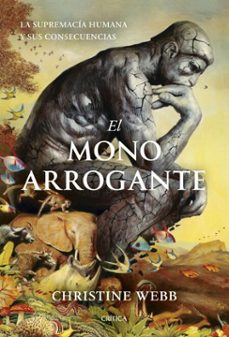
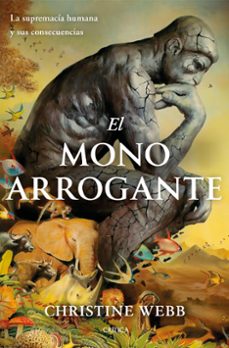
Un alegato brillante contra el antropocentrismo que revela un planeta lleno de inteligencias y culturas más allá de la humana.Darwin consideraba que los seres humanos formamos parte de la red de la vida, no la cuspide de una jerarquia natural. Sin embargo, hoy muchos siguen convencidos de que somos la especie mas inteligente, virtuosa y exitosa que ha existido. Este pensamiento erroneo nos permite explotar la Tierra en beneficio propio, llevandonos a un peligroso desequilibrio planetario. Pero ¿es inevitable esta vision y forma de vida? El mono arrogante demuestra que el excepcionalismo humano es una ideologia que depende mas de la cultura que de la biologia, mas de la ilusion y la fe que de la evidencia.Christine Webb, primatologa de Harvard, lleva años investigando las ricas vidas sociales, emocionales y cognitivas de nuestros parientes mas cercanos. Pone al descubierto los sesgos con que muchas investigaciones cientificas juzgan a otras especies y revela la complejidad a menudo ignorada del mundo no humano: desde el lenguaje de los pajaros cantores y los perritos de las praderas hasta las culturas de los chimpances y los peces de arrecife, o la sorprendente inteligencia de las plantas y los hongos. Con relatos fascinantes y nuevas investigaciones, nos ofrece una perspectiva transformadora para comprender a otros seres vivos en sus propios terminos, una vision que esta revolucionando nuestra manera de entender tanto a los demas como a nosotros mismos.Las criticas al excepcionalismo humano suelen centrarse en nuestra obligacion moral hacia las demas especies, pero olvidan lo que tambien podriamos ganar si desmontamos nuestras ilusiones de singularidad y superioridad. Este cambio de perspectiva nos llena de asombro y satisface uno de nuestros deseos mas profundos: el de pertenecer al gran conjunto del que formamos parte. Lo que esta en juego es una forma de vida mejor y sostenible, con el potencial de sanar y regenerar nuestro planeta comun.
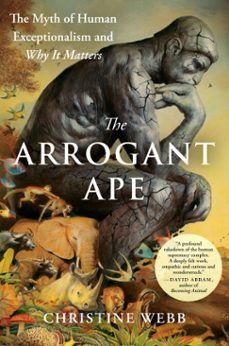
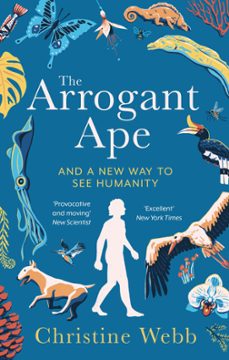
A New York Timess Notable Book of 2025An impassioned celebration of humility before the living world that leads us to a new understanding of other speciesand ourselvesDarwin considered humans one part of the web of life, not the apex of a natural hierarchy. Yet today many maintain that we are the most intelligent, virtuous, successful species that ever lived. This flawed thinking enables us to exploit the earth towards our own exclusive ends, throwing us into a perilous planetary imbalance. But is this view and way of life inevitable? The Arrogant Ape shows that human exceptionalism is an ideology that relies more on human culture than our biology, more on delusion and faith than on evidence.Harvard primatologist Christine Webb has spent years researching the rich social, emotional, and cognitive lives of our closest living relatives. She exposes the ways that many scientific studies are biased against other species and reveals underappreciated complexities of nonhuman lifefrom the language of songbirds and prairie dogs, to the cultures of chimpanzees and reef fishes, to the acumen of plants and fungi. With compelling stories and fresh research she gives us a paradigm-shifting way of looking at other organisms on their own terms, one that is revolutionizing our perception both of them and of ourselves.Critiques of human exceptionalism tend to focus on our moral obligation towards other species. They overlook what humanity also stands to gain by dismantling its illusions of uniqueness and superiority. This shift in perspective fills us with a sense of awe and satisfies one of our oldest and deepest desires to belong to the larger whole we inhabit. Whats at stake is a better, sustainable way of life with the potential to heal and rejuvenate our shared planet.
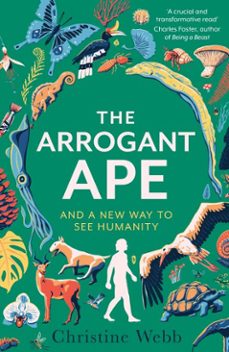
*A book of the year in the New York Times*I wish this book had been published five hundred years ago and been compulsory reading ever since Jay Griffiths, author of How Animals Heal UsA crucial and transformative read Charles Foster, author of Being a BeastWill leave you in awe Justin Gregg, author of If Nietzsche Were A NarwhalMost people are certain that humans are the most intelligent, sophisticated, successful species on earth. But what if were wrong? And what if our arrogant human exceptionalism is leading us to exploit the earth at the expense of other species - and destroy our own world in the process?In The Arrogant Ape, leading primatologist Christine Webb challenges our belief in human superiority by revealing underappreciated wonders of nonhuman life - from the language of songbirds and prairie dogs, to the cultures of chimpanzees and reef fishes, to the acumen of plants and fungi. She shows how human exceptionalism has even crept into the sciences, distorting how we study and understand other species. With fresh research into the rich social, emotional and cognitive lives of animals, and compelling stories from all over the world, The Arrogant Ape demonstrates how our belief in our own importance is directly linked to some of the greatest threats against us and our environment - and offers a hopeful, inspiring way forwards.