












Sinopsis
For two years now Ive been regularly blogging about ELT-related issues that have caught my attention. The topics have been loosely organized around the format of an encyclopaedic dictionary Id published previously, called An A-Z of ELT. Ive since clocked up over a hundred posts that in turn have attracted thousands of comments comprising I dont know how many tens of thousands of words.
A couple of things that have emerged from this long conversation are: (1) the same issues come round and round, and (2) they are often framed as questions.
The issues tend to relate to my other life as advocate of a Dogme approach to ELT teaching, i.e. the use of minimal materials so as to free up the classroom space (and the cognitive space) in order to allow student-initiated learning opportunities to arise naturally.
That the issues are framed as questions is partly due to the fact that there are still no answers to many of the concerns that exercise us, and partly because, in my teaching and in my training, I favour dialogue over monologue, and dialogue – almost by definition – entails asking questions.
Like many things online, the blog has started to become a little unwieldy, especially for new visitors, so I figured it was time to condense some of the issues and some of the questions into a friendlier format, taking a handful of the original entries as my starting point, re-working them a little to take into account the conversations that evolved online, and presenting them in the form of Big Questions.
Each Big Question, therefore, has been generated from one of the original blog posts (and Ive thrown in a couple of new ones for good measure) and each entry is rounded off by a number of subsidiary questions – the offspring, if you like, of the Big Questions. These questions are designed as an aid to reflection (for the individual reader), or, in a training context, as a way of framing a discussion or workshop. In a sense, they are a means of re-activating, and continuing, the online conversations that the original blog posts triggered.
And, if you want to see how those conversations evolved, Ive provided links to the original articles.

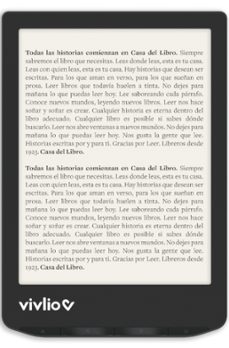
-15€ en eReader Vivlio Light Zen*
Este verano lee sin parar. Del 13 de julio al 2 de agosto llévate nuestro eReader Vivlio Light Zen por solo 94,99€ (-15 € de descuento).
Léelo en cualquier dispositivo


Ficha Técnica
Editorial: Autor-editor
ISBN: 9781310303494
Idioma: Inglés
Fecha de lanzamiento: 01/02/2014
Especificaciones del producto
Recibe novedades de Scott Thornbury directamente en tu email
Reseñas sobre Big Questions in ELT
Comparte tu experiencia con la comunidad lectora.
0 Reseñas
Sólo por opinar entras en el sorteo mensual de tres tarjetas regalo valoradas en
20€


*Descuento de 15 euros en el eReader Vivlio Light Zen, válido para pedidos realizados en casadellibro.com del 13 de julio al 2 de agosto y solo para los 300 primeros compradores, hasta fin de existencias.